
railway-usa.com
27
'26
Written on Modified on
High-Speed Rail Manufacturing Expands U.S. Capability
Alstom advances domestic high-speed rail production with Avelia-based trains for Amtrak, combining local manufacturing, economic impact, and compliance with U.S. safety standards.
www.alstom.com
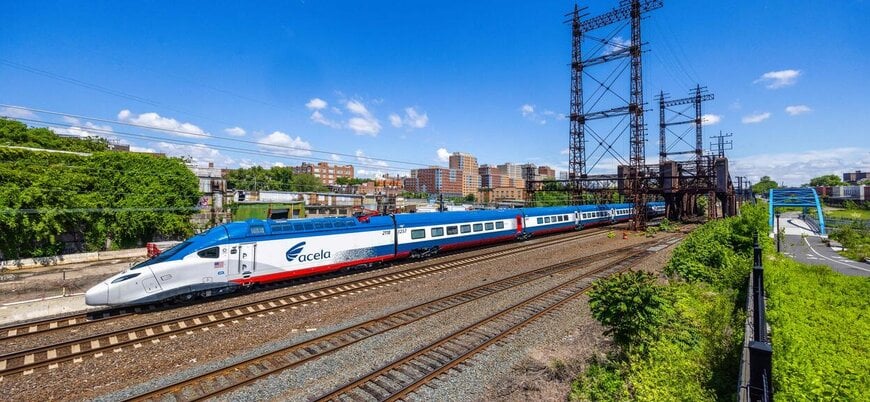
Alstom has expanded high-speed rail manufacturing in the United States through production of its Avelia-based trains for Amtrak. The program supports the deployment of next-generation trains while establishing a domestic industrial base for high-speed rail.
Domestic manufacturing and supply chain development
The project has contributed to the creation of more than 1,200 jobs in upstate New York, including approximately 800 manufacturing roles in Hornell. Beyond direct employment, the initiative supports a broader supply chain network involving 180 suppliers across 29 states and 137 communities.
With 95% domestic content, the program represents a localized production model for high-speed rail vehicles in the United States. In total, an estimated 15,000 jobs are supported nationwide through associated manufacturing and supply chain activities.
This approach strengthens domestic capabilities in rail manufacturing, reducing reliance on imports and enabling more efficient execution of future high-speed rail projects.
High-speed platform adapted for U.S. operations
The trains are based on the Avelia platform, adapted for operation in the U.S. rail environment. Designed for speeds of up to 160 mph (approximately 257 km/h), the trains represent the highest-speed passenger rail service currently available in North America.
The design incorporates features to improve ride quality on existing infrastructure, particularly on curved sections of the Northeast Corridor. These adaptations are essential for achieving higher speeds while maintaining passenger comfort on legacy rail alignments.
Compliance with advanced safety standards
The trains have been developed to meet the Federal Railroad Administration Tier III requirements, which define safety criteria for high-speed rail operations in the United States. Compliance includes rigorous testing and validation to ensure compatibility with mixed-traffic environments and existing rail systems.
Meeting Tier III standards enables integration of high-speed trains into corridors shared with conventional rail traffic, supporting incremental modernization of rail infrastructure.
Industrial and operational footprint in the U.S.
Alstom has an established presence in the U.S. rail sector, having delivered more than 12,000 rail vehicles for transit agencies and airport systems across major metropolitan regions. In addition to manufacturing, the company provides rail services and operates systems for multiple customers nationwide.
The expansion of high-speed rail manufacturing builds on this footprint, combining European high-speed expertise with localized production and engineering capabilities.
Contribution to long-term rail development
The program demonstrates how high-speed rail projects can generate economic impact beyond transportation benefits. By developing a domestic manufacturing ecosystem and supply chain, the initiative supports long-term industrial capacity and workforce development.
This model aligns with broader efforts to modernize rail infrastructure while fostering local industry participation, enabling scalable and competitive deployment of future high-speed rail systems in the United States.
Edited with AI assistance.
Edited with AI assistance.
www.alstom.com
