
railway-usa.com
20
'26
Written on Modified on
CSX Deploys Drone Inspections for Empty Railcars
CSX validates semi-automated drone inspection flights at its Curtis Bay coal terminal to detect residual material and prevent train weight imbalances.
www.csx.com
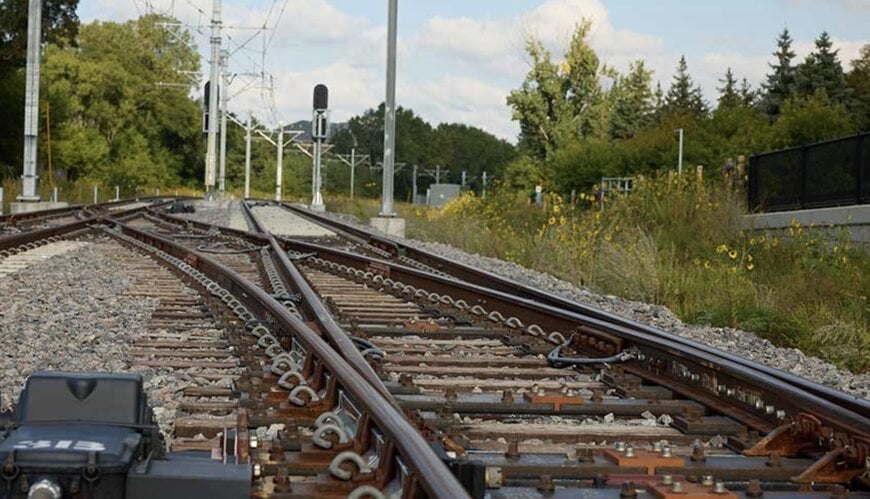
In heavy-haul bulk rail operations, managing train dynamics and mechanical stability depends on uniform axle loading across rolling stock. When bulk commodities such as coal adhere to interior railcar hoppers following rotary dumping—a failure mode accelerated during winter months when moisture freezing creates material hang-ups—the resulting asymmetrical mass distribution shifts the center of gravity. This uneven loading can increase wheel climb tendencies, generate localized coupler stress, and induce wheel-rail interface instability during main-line transit. Detecting localized material carryback conventionally requires ground personnel to conduct visual walkarounds or climb equipment ladders, introducing fall hazards and slowing terminal turnaround times. Resolving these operational risks requires high-throughput aerial imaging integrated directly into yard operating procedures.
Semi-Automated Aerial Yard Surveys
At the Curtis Bay coal terminal in Baltimore, Maryland, the CSX Safety and Maintenance engineering teams developed and validated an aerial inspection workflow utilizing semi-automated drones. The uncrewed aircraft systems navigate pre-programmed flight paths designed to survey the facility's empty-car yard within approximately 30 minutes, capturing overhead visual records of hopper interiors.
The flight corridors support both daytime and nighttime operational envelopes. For low-light or nocturnal yard inspections, the drone platforms deploy onboard spotlights to illuminate railcar cavities, delivering clear visual telemetry for real-time monitoring or post-flight review. The initiative was developed by Larry Gelo, Director of Export Terminals Maintenance; Edward Cox, Manager of Safety and Data Analytics; Andy Matthews, Manager of Safety; and Kim Thomas, Senior Safety Data Analyst. Remote piloting operations are executed under Federal Aviation Administration (FAA) Part 107 certifications held by the site team.
Operational Validation and Yard Workflow Integration
Field trials at the Baltimore export facility confirmed flight path repeatability, collision-avoidance buffers, and aerial footage review procedures across the yard's track infrastructure. While warm seasonal conditions prevented natural frozen coal hang-ups during the initial testing period, the procedural protocols and qualified operating personnel are established for active deployment during seasonal cold-weather surges.
By replacing physical railcar climbing with overhead drone sweeps, the terminal workflow isolates potential carryback loads before empty hoppers are assembled into outbound consist blocks. This approach mitigates workplace injury exposure on slick yard walkways while establishing an auditable digital record of car conditions prior to interchange.
Additional Context
This section details technical specifications and competitive benchmarking not included in the original product announcement.
In North American freight rail operations governed by the Association of American Railroads (AAR) and the Federal Railroad Administration (FRA), uneven lading is a primary contributor to dynamic derailments, particularly on curved track sections and turnouts. When gross weight imbalances exceed standard vehicle-track interaction tolerances defined under 49 CFR Part 213, asymmetric wheel unloading can occur, causing the lighter wheel on an axle to lift under lateral curving forces. Class I freight carriers, including Union Pacific, BNSF Railway, and Norfolk Southern, traditionally screen for lateral and longitudinal mass discrepancies using trackside Wheel Impact Load Detectors (WILD) and wayside Truck Bogie Optical Geometry Inspection (TBOGI) systems. However, wayside strain gauges identify weight imbalances only after the train is assembled and moving on main lines, requiring expensive set-outs and switching operations if an overloaded or improperly balanced car is detected.
Deploying uncrewed aerial systems equipped with high-resolution RGB and thermal sensors provides predictive detection at the terminal source. By surveying hoppers before block assembly, automated image-processing pipelines can estimate residual bulk volume against known hopper tare volumes. Furthermore, integrating night-rated small uncrewed aerial systems (sUAS) featuring dual electro-optical/infrared (EO/IR) payloads provides contrast differentiation between freezing coal deposits and bare steel car walls, reducing terminal dwelling hours and optimizing bulk network velocity across regional export terminals.
Edited by Romila DSilva, Induportals Editor, with AI assistance.
www.csx.com
