
railway-usa.com
20
'26
Written on Modified on
Railcar Systems Highlighted at Heavy Haul Conference
Amsted Rail presents railcar components and engineering solutions at WRI Heavy Haul Conference 2026 to support reliability and performance in freight rail systems.
www.amstedrail.com
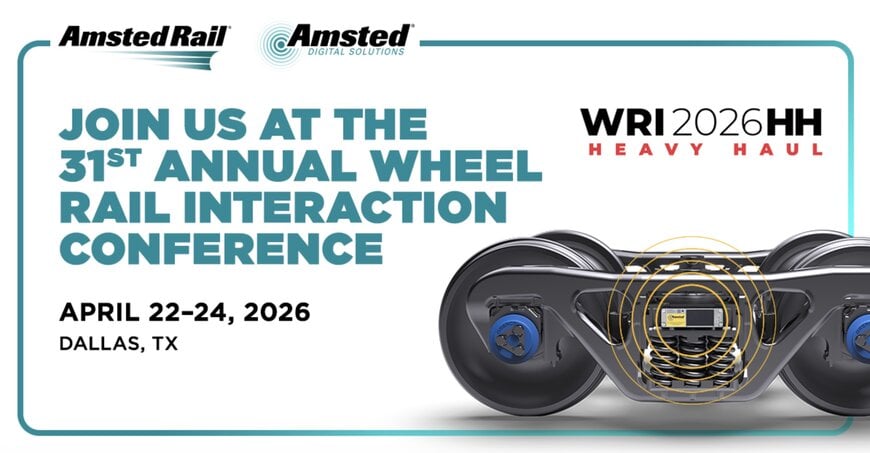
Amsted Rail is participating in the 31st Annual WRI Heavy Haul Conference, held from April 22 to 24, 2026, in Dallas, Texas. The event focuses on technical developments at the wheel–rail interface, a critical area influencing performance, maintenance, and lifecycle costs in freight and shared-track rail networks.
Focus on Wheel–Rail Interface Performance
The WRI Heavy Haul Conference brings together operators, manufacturers, and engineers to examine how material design, component interaction, and operational practices affect rail system efficiency. The wheel–rail interface is a key factor in determining wear rates, noise generation, and energy consumption in heavy haul operations.
Discussions at the event typically address topics such as contact mechanics, friction management, and track-component interaction, all of which influence the durability and safety of rail infrastructure.
Railcar Components and System Reliability
Amsted Rail is presenting its railcar systems and components within the ExpoZone, highlighting technologies aimed at improving reliability across freight networks. These systems are designed to withstand high axle loads and continuous operation typical of heavy haul environments.
Key performance considerations for such components include resistance to mechanical fatigue, load distribution efficiency, and compatibility with existing rail infrastructure. Improvements in these areas contribute to reduced maintenance intervals and lower total cost of ownership for rail operators.
Relevance for Freight and Shared-Track Systems
Heavy haul rail systems often operate on shared infrastructure, where freight and passenger services coexist. This increases the importance of component reliability and consistent performance under varying operational conditions.
Technologies showcased at the conference support optimization of railcar behavior under load, helping to minimize track degradation and improve overall network efficiency. These advancements are particularly relevant as freight volumes increase and infrastructure utilization intensifies.
Edited by Romila DSilva, Induportals editor, with AI assistance.
www.amstedrail.com
