
railway-usa.com
03
'26
Written on Modified on
Rail Network Resilience During Severe Winter Weather
Union Pacific maintained freight operations during widespread winter weather through advance planning and coordinated network response.
www.up.com
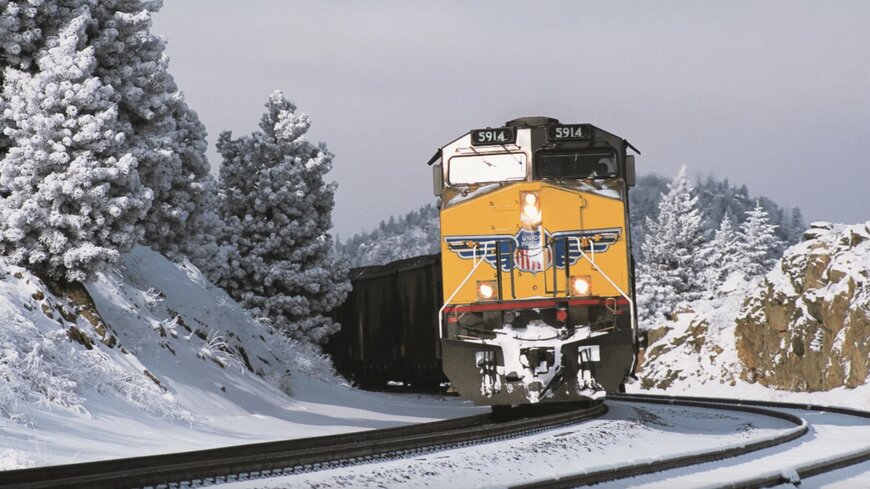
Union Pacific sustained safe and reliable freight operations during severe winter weather by implementing advance planning measures, pre-positioning resources, and coordinating cross-functional response across its rail network.
Network-wide preparation ahead of severe weather
As snow, sleet, and ice affected large parts of the rail network—including regions unaccustomed to prolonged winter conditions—Union Pacific activated pre-storm planning protocols. Daily coordination calls and network-wide planning sessions were held ahead of the anticipated impact to align operating, engineering, mechanical, and field teams.
This early coordination created operational buffers across the network, allowing traffic to be managed proactively rather than reactively. From an operational perspective, advance alignment across crafts is critical to maintaining train velocity and minimizing cascading disruptions during weather-related constraints.
Asset positioning and power continuity
To maintain service continuity under restricted conditions, locomotive sets were strategically pre-positioned across affected territories. This approach reduced dependency on crew and asset repositioning during the storm, when access was limited by weather and road conditions.
In parallel, crews deployed more than 100 portable generators to critical operational locations. These units provided temporary power where commercial electricity was disrupted, supporting continued operation of essential systems and reducing the risk of extended delays linked to power outages.
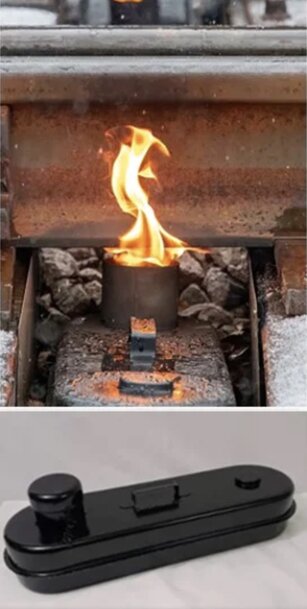
More than 300 smudge pots were placed in locations without switch heaters to prevent critical infrastructure from freezing. Bottom: A close-up view of the smudge pot device.
Infrastructure protection and rapid recovery
Infrastructure resilience was a central focus of the response. In locations without installed switch heaters, teams deployed more than 300 smudge pots to prevent switches from freezing, helping preserve route availability and reduce manual intervention requirements.
Maintenance crews also surged resources to address weather-related damage. Activities included repairing broken rails, clearing more than 400 fallen trees from rights-of-way, and removing multiple downed power lines. Rapid response to these issues supported faster restoration of normal operations as conditions improved.
Operational implications
The coordinated response demonstrates how advance planning, distributed asset placement, and targeted infrastructure protection can mitigate the operational impact of extreme weather on a freight rail network. By combining predictive preparation with field-level execution, Union Pacific was able to sustain service performance while prioritizing safety under atypical winter conditions.
For rail operators, the event highlights the importance of integrated operational planning and resilient infrastructure strategies as weather variability increasingly affects network reliability.
www.up.com
