
railway-usa.com
13
'26
Written on Modified on
Union Pacific and Miller Welding Advance Robotic Technology in Rail Operations
Crews position the robotic arm, maintain a safe distance and activate the system, which safely executes uniform welds with 30% less heat – at twice the speed.
www.up.com
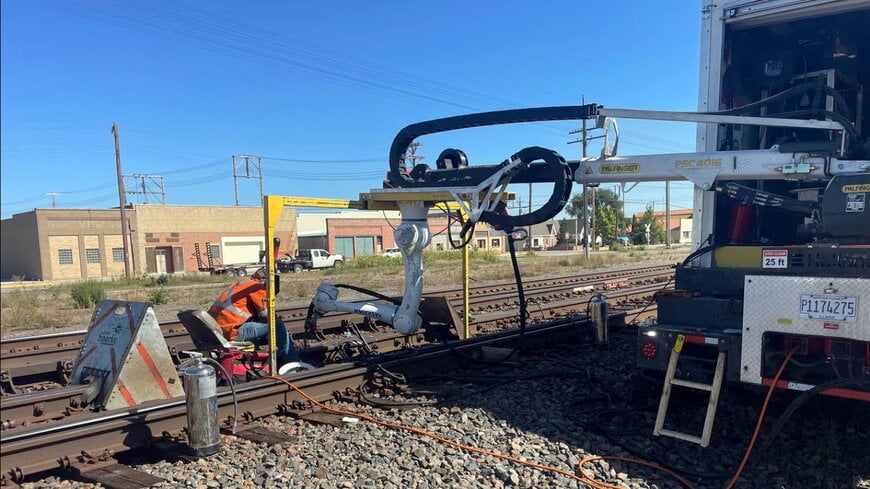
Union Pacific is enhancing its safety and operational efficiency with the implementation of cutting-edge robotic welding technology. This new approach offers significant advancements over traditional methods and positions Union Pacific as a leader in the rail industry.
The technology is part of a broader effort to streamline rail maintenance and repair processes, improving safety for workers and operational performance across the network. By adopting automation in welding, the company is able to reduce human error and ensure more precise and consistent welds on rail track components.
Robotic Welding: A Game Changer for Rail Operations
Robotic welding technology is designed to tackle one of the most challenging tasks in rail maintenance: welding track components that are subjected to constant pressure and wear. Unlike traditional manual welding, which can be inconsistent and time-consuming, robotic welding ensures high-quality, uniform welds that extend the lifespan of rail components and improve their durability under stress.
Union Pacific’s robotic system operates with impressive precision, reducing the risk of flaws and rework. This technology significantly enhances the maintenance process by automating repetitive and strenuous tasks, which also reduces physical strain on workers. With its ability to operate around the clock, it speeds up welding operations while maintaining high standards of quality.
Differentiation from Competitors
While some rail companies have adopted robotic welding in their operations, Union Pacific’s system stands out due to its scale and integration into their broader automation strategy. The company’s investment in robotic welding is a part of a multi-faceted approach to modernize its fleet and facilities. This commitment to automation is not only a technological upgrade but a strategic move to address labor shortages and rising safety concerns in the industry.
In comparison to competitors, Union Pacific’s welding robots are designed to handle a wider variety of rail components, from switches to crossings, allowing for a more flexible and comprehensive approach to track repair and maintenance. The system also employs advanced sensors that monitor the welding process in real time, ensuring quality control and identifying potential issues before they impact operations.
Enhanced Worker Safety and Operational Efficiency
One of the key benefits of Union Pacific’s robotic welding technology is the safety improvement for employees. The manual welding process, while effective, involves workers being exposed to hazardous conditions such as extreme heat, sparks, and fumes. By replacing humans with robots for the most dangerous tasks, Union Pacific minimizes these risks, contributing to a safer working environment.
Moreover, this automation results in faster turnaround times for track repairs and reduces maintenance costs over time. With the ability to perform tasks with higher accuracy and less downtime, the company enhances operational efficiency and service reliability, a critical factor in maintaining a competitive edge in the freight transportation industry.
The Future of Rail Maintenance
Union Pacific’s commitment to robotic welding represents a significant leap forward in rail industry technology. By integrating robotics into its operations, the company not only ensures safer, more efficient maintenance but also sets a new benchmark in the rail industry. As the company continues to innovate with advanced automation, it strengthens its position as an industry leader focused on safety, efficiency, and long-term sustainability.
www.up.com
