
railway-usa.com
29
'25
Written on Modified on
Alstom Secures Major DMU Train Contract for Mexico Rail Corridors
The €920 million contract covers 47 diesel multiple units and five years of maintenance, supporting new long-distance and regional passenger services across central and northern Mexico.
www.alstom.com
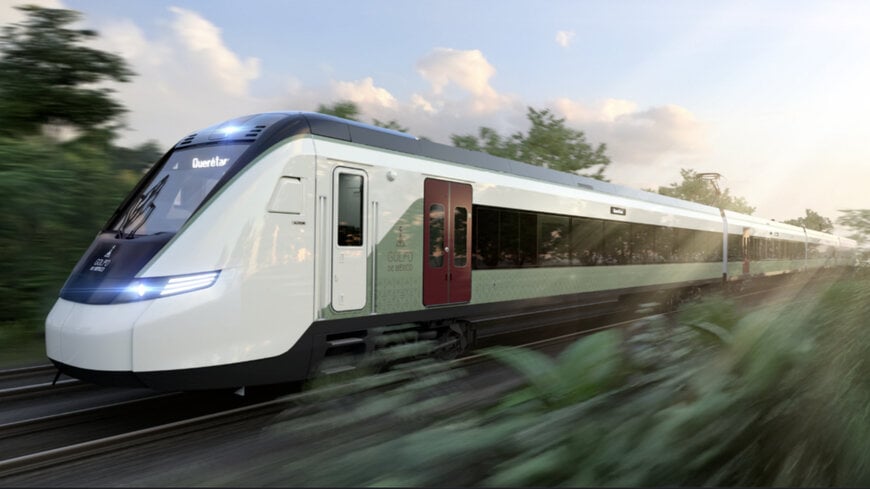
Mexico is accelerating the revival of passenger rail as part of its National Development Plan 2025–2030, with new corridors aimed at strengthening regional connectivity and reducing road congestion. Against this backdrop, Alstom has been awarded a major rolling stock and services contract that combines fleet delivery, local manufacturing, and long-term operational support.
The company has signed an agreement with the Railway Transport Regulatory Agency (ARTF) to supply 47 diesel multiple unit (DMU) passenger trains for the Mexico City–Querétaro–Irapuato and Saltillo–Monterrey–Nuevo Laredo corridors. The contract is valued at approximately 20.2 billion Mexican pesos (€920 million) and includes comprehensive maintenance and depot infrastructure over a five-year period.
Fleet scope and operational requirements
The order comprises 33 long-haul and 14 short-haul DMU trainsets designed for catenary-free operation. The trains are intended to serve both intercity and regional services, enabling flexible deployment across corridors with differing passenger demand profiles.
Each unit will be approximately 100 metres long and capable of double coupling, forming configurations of up to eight cars. Maximum operating speeds are around 165 km/h. Passenger capacity is specified at approximately 300 passengers for long-haul services and up to 600 for short-haul operations, supporting both comfort and throughput requirements.
Manufacturing and local content
All trains will be manufactured at Alstom’s Ciudad Sahagún facility in the state of Hidalgo. More than 76% of the content will be sourced locally, reflecting a high level of national industrial participation. The plant is equipped for advanced aluminium and stainless-steel fabrication and holds international certifications for rail manufacturing.
The project is expected to support the creation and retention of hundreds of jobs across engineering, project management, and manufacturing functions, while strengthening the domestic rail supply chain.
Maintenance, depots, and lifecycle support
Beyond rolling stock delivery, the contract includes comprehensive maintenance services for five years, as well as the fitting out of maintenance depots, inspection facilities, and refuelling stations. Scope also covers technical training and commissioning activities to support safe and reliable entry into service.
Alstom’s maintenance approach combines corrective and preventive strategies, supported by systems engineering and predictive tools designed to optimise availability and lifecycle costs.
Technical platform and passenger features
The trains are based on Alstom’s Adessia commuter rail platform, which is deployed in urban and regional networks worldwide. The design incorporates full accessibility for passengers with reduced mobility, real-time passenger information systems, and modern safety features aligned with international standards.
Materials selection and lightweight construction contribute to energy efficiency and durability, supporting long-term operational performance under varied climatic and service conditions.
Role in Mexico’s passenger rail expansion
The project represents a significant step in re-establishing passenger rail services across key regions of Mexico, connecting major urban centres and border corridors. By combining locally manufactured rolling stock with long-term maintenance and infrastructure support, the programme aims to deliver reliable, scalable passenger rail capacity while strengthening domestic rail industry capabilities.
www.alstom.com
