
railway-usa.com
20
'25
Written on Modified on
Caltrain to be Paid for Clean Power Returned to the Grid
Currently, Caltrain returns approximately 23% of the power it uses back to the power grid, providing power to residents and businesses along its corridor.
www.caltrain.com
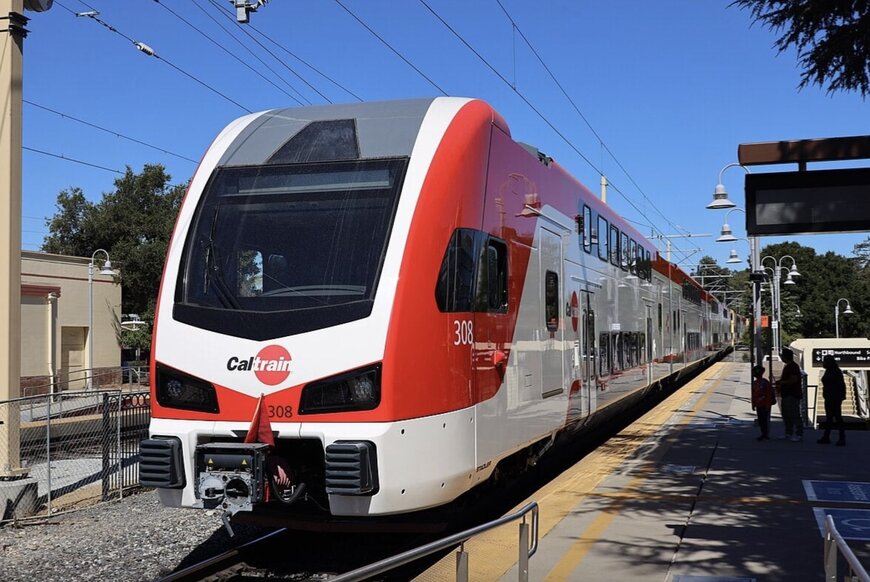
Caltrain will now be compensated for the power its new electric trains return to the grid through regenerative braking, thanks to policy changes by its clean energy partners Peninsula Clean Energy (PCE) and San Jose Clean Energy (SJCE). Caltrain runs on 100% renewable energy supplied by PCE and SJCE, mostly solar and wind. Currently, Caltrain returns approximately 23% of the power it uses back to the power grid, providing power to residents and businesses along its corridor.
SJCE and PCE will now both allow Caltrain to qualify for a Net Billing Rate starting in April 2026, which will enable Caltrain to receive approximately $1 million annually in compensation for the clean power it sends back to the grid.
“Caltrain’s new electric trains don’t just use electricity—they also give some back," said Director of San José Clean Energy Lori Mitchell. "Our Green Transportation program is the first in the state and one of the few in the country to give credit to public transit systems like Caltrain for the energy they return to the grid, helping them save money and reduce pollution.”
“Caltrain running train service on 100% renewable energy for the first time in 161 years is a victory in and of itself,” said Caltrain Executive Director Michelle Bouchard. “But now that our partners at PCE and SJCE have agreed to compensate us for the power we return to the grid, we have yet another reason to celebrate our transition to the electric fleet. I thank PCE and SJCE for their dedication to both public transit and clean power, and Assemblymember Papan for leading the charge on this issue. We’ll all be breathing easier because of their efforts.”
Originally estimated to cost approximately $19.5 million annually, Caltrain’s electricity use since the launch of electric service averages 207 MWh on weekdays and 175 MWh on weekends, revising cost estimates to $15.3 million. PCE and SJCE 100% renewable energy products also allow Caltrain to generate revenues from the California Low Carbon Fuel standards program, further lowering Caltrain’s electric fuel costs.
Regenerative braking is a technology first introduced to electric trains in 1886. They work by driving an electric motor in reverse to recapture energy rather than losing it as heat during braking. Caltrain’s fleet is designed to return that power to the Overhead Contact System (OCS), which feeds it to the nearest traction power facility. From there, it can be used to power other trains on the system or returned to the grid.
www.caltrain.com
