
railway-usa.com
30
'26
Written on Modified on
High-Speed Rail Engineering for America's Most Ambitious Rail Program
Egis supports the California High-Speed Rail Authority with systems engineering, program management, and operational readiness to connect major urban corridors at 220 mph.
www.egis-group.com
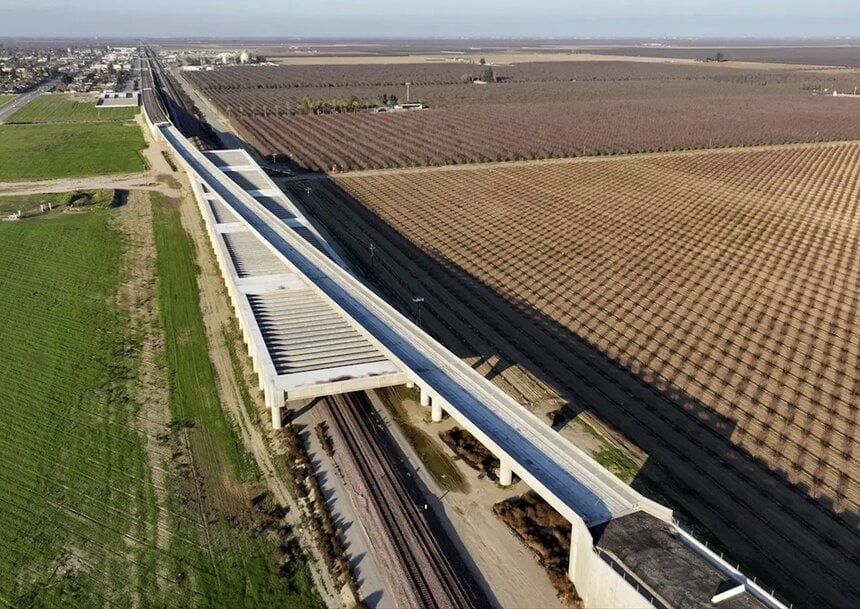
Megaproject rail transit across North America contends with complex right-of-way constraints, conflicting interface standards between legacy networks and dedicated high-speed tracks, and the integration of multi-tier supply chains. Building greenfield high-speed rail requires coordinating civil structures, 25 kV AC overhead catenary systems, automated train control signaling, and strict environmental impact mandates. To address these operational coordination and systems integration challenges, Egis has delivered continuous program delivery support and rail systems engineering services to the California High-Speed Rail Authority (CHSRA) across the project lifecycle.
Systems Integration Across Distributed Civil and Electrical Packages
The California High-Speed Rail program represents the first dedicated high-speed network in the United States, engineered to link major economic hubs—including San Francisco, the Central Valley, and Los Angeles—at operational speeds reaching 220 miles per hour (354 kilometers per hour). Coordinating independent construction packages across hundreds of miles requires strict alignment between heavy civil earthworks, grade separations, track systems, and traction power substations.
Egis deploys systems engineering protocols to ensure that civil asset geometries—such as viaduct structural deflection limits, tunnel cross-sectional areas for aerodynamic pressure waves, and track slab stiffness—interface seamlessly with traction power and high-speed rolling stock dynamics. This technical coordination prevents costly spatial conflicts and avoids performance downgrades before catenary energization and dynamic commissioning commence.
Lifecycle Governance and Operational Commissioning
The project delivery framework spans technical disciplines across the entire capital investment cycle:
- Systems engineering and interface management: Enforcing technical baselines across rolling stock, signaling, train dispatching, and power distribution interfaces.
- Strategic procurement and contract packaging: Structuring delivery frameworks for trackwork, overhead electrification systems, and specialized maintenance contracts.
- Environmental compliance and permitting: Ensuring alignment with local environmental review standards and California Environmental Quality Act requirements.
- Operational readiness and trial running: Establishing testing protocols, operations and maintenance (O&M) safety rules, and operating procedure baselines to ensure rapid transition to revenue service.
Integrating international expertise derived from high-speed programs across Europe, Asia, and North Africa with local engineering practices ensures that cross-disciplinary requirements—ranging from seismic design criteria to positive train control (PTC) interoperability—are rigorously verified.
Decarbonization Impact and Transit Network Architecture
The rail corridor provides an electrically powered, low-carbon alternative to domestic short-haul aviation and congested interstate highway corridors. By shifting regional intercity passenger transit from fossil-fuel highway vehicles and regional jet aircraft to an electrified 220-mph rail network, the system significantly lowers regional greenhouse gas emissions while establishing the operational backbone for interconnected transit systems throughout California.
Additional Context:
This section details technical specifications and competitive benchmarking not included in the original product announcement.
High-speed rail systems operating above 200 mph (320 km/h) require strict adherence to international interoperability and signaling standards. While conventional U.S. passenger rail operations on the Northeast Corridor (such as Amtrak's Acela) operate at maximum revenue speeds between 125 and 150 mph (201 to 241 km/h) on shared, legacy ballasted tracks governed by ACSES and Type 91 cab signaling, the California High-Speed Rail system is designed for dedicated slab track alignments supporting 220 mph sustained operation. This requires advanced train control architectures functionally equivalent to European Train Control System (ETCS) Level 2 or modern Positive Train Control running over dedicated radio block centers, enabling continuous movement authority updates and tight headway control without wayside optical signals.
Globally, high-speed rail systems engineering services are benchmarked against engineering and advisory firms including SYSTRA, DB Engineering & Consulting, and Mott MacDonald. Program delivery support on the California High-Speed Rail network was awarded within major delivery consortiums, such as the AECOM-Fluor program delivery support team, which integrates international engineering specialists—including Egis Rail—alongside North American engineering partners to supervise civil works delivery, systems alignment, and construction management across the initial 119-mile and 171-mile Central Valley operating segments.
Edited by Natania Lyngdoh, Induportals editor, with AI assistance.
www.egis-group.com
Decarbonization Impact and Transit Network Architecture
The rail corridor provides an electrically powered, low-carbon alternative to domestic short-haul aviation and congested interstate highway corridors. By shifting regional intercity passenger transit from fossil-fuel highway vehicles and regional jet aircraft to an electrified 220-mph rail network, the system significantly lowers regional greenhouse gas emissions while establishing the operational backbone for interconnected transit systems throughout California.
Additional Context:
This section details technical specifications and competitive benchmarking not included in the original product announcement.
High-speed rail systems operating above 200 mph (320 km/h) require strict adherence to international interoperability and signaling standards. While conventional U.S. passenger rail operations on the Northeast Corridor (such as Amtrak's Acela) operate at maximum revenue speeds between 125 and 150 mph (201 to 241 km/h) on shared, legacy ballasted tracks governed by ACSES and Type 91 cab signaling, the California High-Speed Rail system is designed for dedicated slab track alignments supporting 220 mph sustained operation. This requires advanced train control architectures functionally equivalent to European Train Control System (ETCS) Level 2 or modern Positive Train Control running over dedicated radio block centers, enabling continuous movement authority updates and tight headway control without wayside optical signals.
Globally, high-speed rail systems engineering services are benchmarked against engineering and advisory firms including SYSTRA, DB Engineering & Consulting, and Mott MacDonald. Program delivery support on the California High-Speed Rail network was awarded within major delivery consortiums, such as the AECOM-Fluor program delivery support team, which integrates international engineering specialists—including Egis Rail—alongside North American engineering partners to supervise civil works delivery, systems alignment, and construction management across the initial 119-mile and 171-mile Central Valley operating segments.
Edited by Natania Lyngdoh, Induportals editor, with AI assistance.
www.egis-group.com
