
railway-usa.com
28
'26
Written on Modified on
Jacobs Supports National Passenger Rail Fleet Modernization Across Canada
Technical advisory services will guide procurement, engineering oversight, and commissioning for long-distance and regional rolling stock replacement across national transit routes.
www.jacobs.com
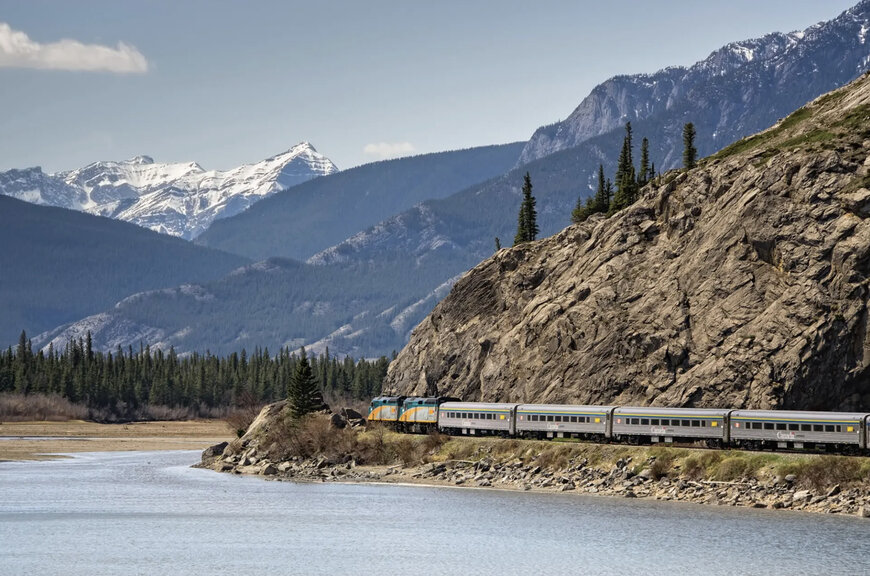
Jacobs has secured a technical advisory and program management mandate from VIA Rail Canada to oversee the national operator's Long Distance, Regional and Remote fleet renewal program. The engineering initiative focuses on upgrading intercity, regional, and remote passenger rail operations by integrating new locomotives and rolling stock across Canada's national transit corridors.
Rolling Stock Procurement and Network Scope
The Long Distance, Regional and Remote fleet renewal program encompasses more than 300 units of rolling stock, replacing equipment across services connecting the Atlantic, Pacific, and Hudson Bay coasts. The asset replacement includes line-haul locomotives, passenger coach cars, sleeping compartments, and dining units configured to withstand cross-continental climate extremes and prolonged duty cycles.
Jacobs oversees the complete delivery phase from its base in Montréal, working in collaboration with rail engineering partner SYSTRA. Engineering mandates cover manufacturing quality assurance, assembly oversight, dynamic track testing, subsystem commissioning, and Transport Canada regulatory compliance verification. This deployment follows the previous Corridor Fleet Renewal Program, which integrated 32 bi-directional trainsets along the high-density rail segment between Québec City and Windsor. Technical continuity from that corridor replacement informs the engineering parameters and testing protocols required for long-distance remote operations.
Transit Engineering Management and System Integration
The delivery phase coordinates specialized technical teams across Canada and international locations to supervise systemic compatibility, structural integrity, accessibility standards, and onboard power distribution.
Engineering management protocols focus on standardizing vehicle mechanics, modern train control systems, passenger accessibility provisions, and lifecycle diagnostic telematics to replace legacy fleets built between the mid-20th century and the 1980s.
Additional Context:
This section details technical specifications and competitive benchmarking not included in the original product announcement
North American passenger rolling stock renewal programs must comply with federal crashworthiness standards set by the Federal Railroad Administration (FRA) in the United States and parallel standards under Transport Canada regulations, specifically 49 CFR Part 238 Tier I structural requirements. In comparable intercity fleet modernization programs, such as Amtrak's long-distance procurement initiatives and the California Department of Transportation regional coach contracts, technical specifications benchmark Tier 4 EPA-compliant diesel-electric or dual-mode diesel-catenary locomotives paired with centralized predictive maintenance architectures. Fleet standardizations typically focus on EN 15227 crashworthiness principles adapted to North American buff strength mandates of 800,000 pounds, universal PRM (Persons with Reduced Mobility) clearance profiles, and closed-loop remote telemetry networks that lower per-mile maintenance costs compared to heritage stainless steel rolling stock.
Edited by Natania Lyngdoh, Induportals editor, assisted by AI.
www.jacobs.com
