
railway-usa.com
17
'26
Written on Modified on
CN Continues to Advance Locomotive Innovations
CN now has three locomotives being tested and is working to transform two additional locomotives into hybrid-electric platforms with AC traction technology.
www.cn.ca
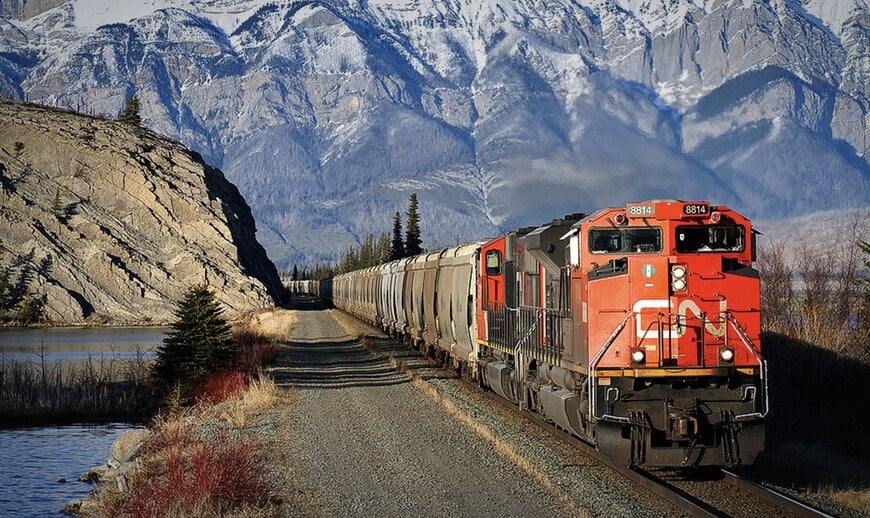
CN has announced the expansion of its hybrid-electric locomotive modernization program aimed at reducing emissions and improving fuel efficiency across yard operations. Following initial pilot testing with a single hybrid unit, CN operates three locomotives under active evaluation and is modifying two additional locomotives into hybrid-electric platforms featuring AC traction technology by the end of 2026.
Pilot Performance Results and Environmental Testing
Operational evaluations from the initial pilot demonstrated up to a 50 percent increase in fuel efficiency, coupled with lower engine-related failure rates, reduced engine idling, and minimized noise emissions in surrounding communities. Test cycles were completed under both high-temperature and extreme cold conditions to optimize platform reliability in diverse operating environments.
Powertrain and Mechanical Specifications
The locomotive conversions introduce several mechanical and electrical upgrades:
- Energy Storage System: Solid-state battery technology replacing conventional lead-acid battery banks.
- Hybrid Configuration: A 2.8 megawatt-hour (MWh) battery storage system integrated with an 800-horsepower (HP) Tier 4 diesel engine.
- Power Output: Total power output increases from 3,200 HP to 3,800 HP.
- Traction Motors: Alternating Current (AC) traction motors packaged directly into Direct Current (DC) motor frame dimensions to preserve existing bogie truck interfaces.
Additional Context
This section details technical specifications not included in the original news release.
Yard switching operations subject locomotives to frequent acceleration, deceleration, and prolonged idle cycles, leading to significant thermal and parasitic mechanical losses in conventional diesel-electric prime movers. Integrating an 800-horsepower EPA Tier 4 certified diesel generator with a large-format energy storage system allows the engine to operate exclusively within its optimal brake-specific fuel consumption (BSFC) curve, acting as a continuous range extender while the battery handles transient tractive peak loads.
Solid-state battery cells utilize solid ceramic or polymer electrolyte layers in place of volatile liquid organic solvents, providing elevated volumetric energy densities and enhanced resistance to thermal runaway under high-current discharge cycles. Retrofitting AC induction traction motors into standard legacy DC frames (such as EMD D77 or D78 outlines) delivers higher continuous tractive effort and reduced wheel-slip tendencies via variable-frequency drive (VFD) inverter control while avoiding bogie casting redesigns or track gauge modifications. Furthermore, the hybrid architecture enables dynamic regenerative braking, returning kinetic energy back into the 2.8 MWh battery pack during deceleration to limit friction shoe wear.
Edited by Romila DSilva, Induportals Editor, with AI assistance.
This section details technical specifications not included in the original news release.
Yard switching operations subject locomotives to frequent acceleration, deceleration, and prolonged idle cycles, leading to significant thermal and parasitic mechanical losses in conventional diesel-electric prime movers. Integrating an 800-horsepower EPA Tier 4 certified diesel generator with a large-format energy storage system allows the engine to operate exclusively within its optimal brake-specific fuel consumption (BSFC) curve, acting as a continuous range extender while the battery handles transient tractive peak loads.
Solid-state battery cells utilize solid ceramic or polymer electrolyte layers in place of volatile liquid organic solvents, providing elevated volumetric energy densities and enhanced resistance to thermal runaway under high-current discharge cycles. Retrofitting AC induction traction motors into standard legacy DC frames (such as EMD D77 or D78 outlines) delivers higher continuous tractive effort and reduced wheel-slip tendencies via variable-frequency drive (VFD) inverter control while avoiding bogie casting redesigns or track gauge modifications. Furthermore, the hybrid architecture enables dynamic regenerative braking, returning kinetic energy back into the 2.8 MWh battery pack during deceleration to limit friction shoe wear.
Edited by Romila DSilva, Induportals Editor, with AI assistance.
