
railway-usa.com
25
'26
Written on Modified on
Strategic capacity assessment for Canadian freight rail
SYSTRA Canada executes a strategic engineering assessment to upgrade the Hudson Bay Railway network to modern industrial weight standards.
www.systra.com

The engineering consulting firm SYSTRA Canada collaborates with the Arctic Gateway Group to evaluate and enhance the capacity of the Hudson Bay Railway corridor. This technical initiative focuses on upgrading the freight rail infrastructure to support heavier industrial loads and integrate with the national Class 1 rail network.
Industrial challenge and technical cooperation
The Canadian freight rail sector faces the operational challenge of accommodating heavier trains and increasing traffic volumes to support the export of natural resources. To address this demand, the Arctic Gateway Group requires a comprehensive evaluation of the existing railway infrastructure connecting to the Port of Churchill. The cooperation with SYSTRA Canada provides the necessary railway engineering and capital investment planning expertise to identify current capacity constraints. This collaboration establishes a structured approach to transition the corridor into a high-capacity international export gateway.
Technical solution and responsibilities
The technical solution involves a systematic engineering assessment of the railway network infrastructure, including the physical condition of tracks, bridges, and hydraulic structures. SYSTRA Canada assumes responsibility for analyzing these structural components and developing engineering scenarios aligned with future operational requirements. The firm utilizes its expertise in heavy-haul transportation to define a prioritized improvement program that meets modern industrial weight standards. The Arctic Gateway Group utilizes these engineering deliverables to establish a reliable framework for future infrastructure investments.
Deployment and implementation
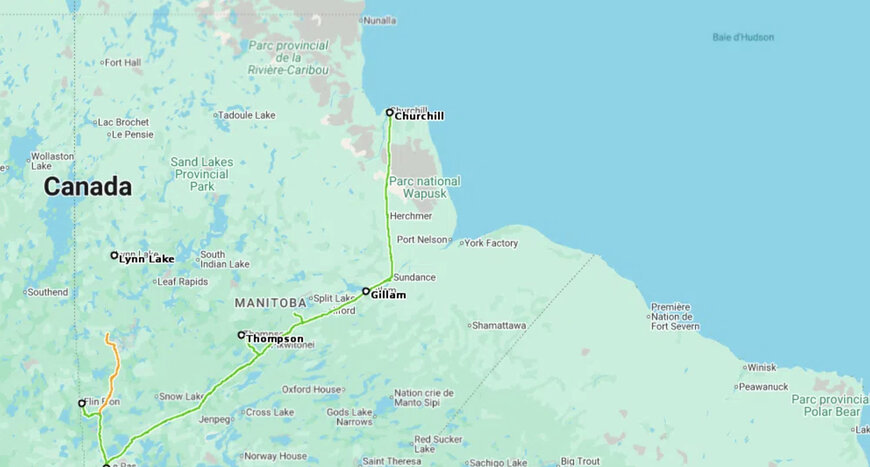
The execution of the engineering study is structured into a two-phase methodology deployed across specific sections of the railway. The initial deployment focuses on the Flin Flon Subdivision, encompassing a 140-kilometer segment that connects Flin Flon to The Pas in Manitoba. Subsequent implementation covers an additional 828 kilometers of the railway network extending to the Port of Churchill. The implementation phases consist of a preliminary corridor assessment to identify critical infrastructure areas, followed by a detailed technical evaluation that yields comprehensive engineering analyses and investment estimations.
Applications and technical use cases
The primary applications of this strategic assessment target the heavy-haul freight transportation and mining rail infrastructure sectors. Concrete technical use cases include the physical evaluation of load-bearing capacities on existing railway bridges and the operational assessment of heavier train traffic along the northern corridor. The resulting operational benefits encompass optimized rail capacity, enhanced structural reliability, and the stabilization of the supply chain for bulk commodity exports.
Quantifiable impact on infrastructure
The completion of the detailed technical assessment generates precise engineering metrics and investment estimations required to upgrade nearly 969 kilometers of railway infrastructure. The implementation of the recommended improvement scenarios will directly increase the structural load capacity of the corridor, enabling the safe operation of heavier freight trains. This targeted infrastructure enhancement establishes a measurable baseline for integrating the regional line with the Canadian Class 1 rail network, optimizing the logistical throughput of natural resources to international markets.
Edited by Maria Brueva, Induportals editor – adapted by AI.
www.systra.com
