
railway-usa.com
14
'26
Written on Modified on
NJ Transit Advances Fleet Modernization Program
NJ TRANSIT unveils new rail cars, buses, and service vehicles to improve reliability, accessibility, and performance across its multimodal transport network.
www.njtransit.com
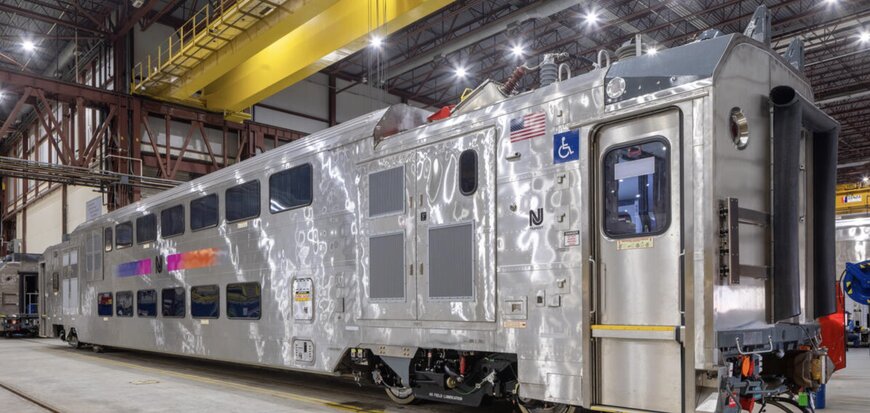
NJ TRANSIT has presented a series of new vehicles and upgrades as part of a more than $3 billion program to modernize its rail and bus fleets by 2031. The initiative includes next-generation multilevel rail cars, updated buses, paratransit vehicles, and operational support units aimed at improving service reliability and passenger experience.
Next-generation rail cars increase reliability and capacity
A key milestone is the delivery of the first Multilevel III rail car, part of an order of 374 vehicles. The new fleet is designed to replace aging single-level rail cars built in the 1970s, which typically require maintenance after 30,000 to 40,000 miles. In contrast, the Multilevel III cars are engineered to operate up to approximately 400,000 miles before mechanical failure, representing a tenfold improvement in reliability.
The vehicles support higher operating speeds of up to 110 mph and include increased seating capacity, onboard information systems, and USB charging ports. Enhanced accessibility features are also integrated to meet current passenger requirements.
The first delivered unit is a multilevel power car equipped with traction motors. These cars can operate independently or in trainsets of up to 14 cars, providing faster acceleration compared to locomotive-driven configurations. The vehicles are manufactured by Alstom in Plattsburgh, New York.
Bus fleet upgrades focus on accessibility and safety
NJ TRANSIT also introduced new 40-foot buses designed to improve operational efficiency and passenger comfort. The vehicles feature low-floor designs with ramps to facilitate faster boarding, particularly for passengers with reduced mobility.
Additional technical upgrades include LED interior lighting for improved energy efficiency, onboard security cameras, blind-spot monitoring systems, and turn-warning alerts to enhance pedestrian safety. Integrated communication systems support clearer onboard announcements.
Paratransit vehicles improve inclusive mobility
The Access Link service presented a new low-floor paratransit vehicle based on the BraunAbility ProMaster Low Floor platform. The vehicle is designed for both ambulatory and non-ambulatory passengers, accommodating up to five seated passengers and one wheelchair user.
The low-floor configuration reduces boarding and disembarking time, supporting more efficient service for elderly passengers and individuals with disabilities. Deployment into service is planned for summer 2026.
Mobile command center enhances operational response
A new 45-foot mobile police command center was also introduced to support incident management and event coordination. The vehicle includes multiple operational zones, such as a dedicated operations room, communications area, and conference space.
Equipped with integrated communication systems, onboard networking, perimeter surveillance cameras, and an independent power supply, the unit functions as a centralized command hub for both routine operations and emergency scenarios.
Light rail refurbishment program extends asset lifecycle
Earlier in the year, NJ TRANSIT unveiled a refurbished River LINE light rail vehicle featuring a renovated passenger interior and engine overhaul. Upgrades include LED lighting, new seating, updated flooring, and revised passenger information systems.
The program plans to modernize 14 light rail vehicles, extending their operational lifespan while improving passenger comfort and service reliability.
Edited by Romila DSilva, Induportals Editor, with AI assistance.
www.njtransit.com
