
railway-usa.com
08
'26
Written on Modified on
New Metro Fleet Enters Revenue Service in Baltimore
Hitachi Rail delivers new metro cars and signalling upgrades for the Maryland Transit Administration’s Baltimore Metro Subway Link.
www.hitachirail.com
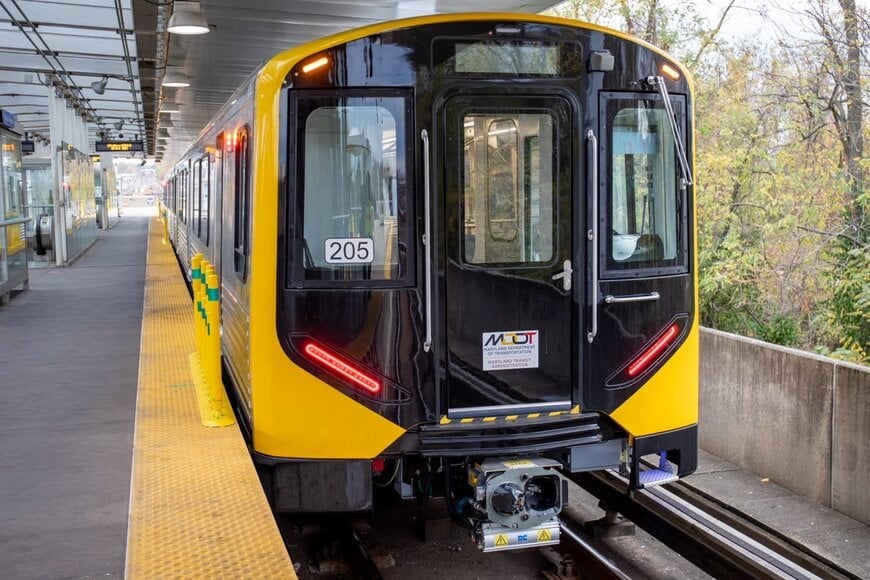
Hitachi Rail has commenced revenue service for a new fleet of metro cars on the Baltimore Metro Subway Link, introducing modern rolling stock and upgraded train control to Maryland’s only heavy rail subway system.
System renewal and project scope
The entry into revenue service marks a major renewal for the Baltimore Metro Subway Link, whose rolling stock and rail control systems were last updated in 1983. The programme was originally contracted in 2017 and covers both vehicle replacement and signalling modernisation for the system operated by the Maryland Transit Administration.
Under a contract valued at approximately USD 400.5 million, Hitachi Rail is supplying 78 new metro cars. Twelve vehicles have been delivered to date, with the remaining units scheduled as part of the phased fleet introduction. The project is intended to improve operational reliability, capacity, and passenger experience for daily commuters.
Train control and capacity enhancement
The new fleet operates with Hitachi Rail’s SelTrac communication-based train control (CBTC) technology. The upgraded CBTC system is designed to increase line capacity and operational performance by enabling more precise train spacing and real-time control.
The architecture supports scalable deployment and incorporates data analytics for system monitoring, which can contribute to reduced lifecycle costs through predictive maintenance and optimized asset management. Such signalling upgrades are a key element in extending the service life and performance of legacy metro corridors without large-scale civil works.
Rolling stock design and passenger features
Each bi-directional married pair consists of two stainless steel cars. Individual railcars provide 76 seats and a total capacity of 196 passengers, supporting high passenger throughput in peak periods. The vehicles are designed for an average annual mileage of approximately 80,000 miles and a service life of around 30 years.
Passenger-facing systems include modern passenger information displays, LED lighting, and interiors designed to meet ADA accessibility requirements. Fiberglass car heads and updated cab layouts are combined with an integrated diagnostic system in the driver’s cab, enabling onboard monitoring of vehicle condition and supporting maintenance planning.
Manufacturing in Maryland
The Baltimore metro cars are the first project completed at Hitachi Rail’s new manufacturing facility in Hagerstown, Maryland. The 307,000 square foot plant, officially opened in September 2025, represents an investment of approximately USD 100 million and is designed as a carbon-neutral production site.
At full operational capacity, the facility can assemble up to 20 railcars per month and employ around 460 staff. The factory integrates digital manufacturing processes, including real-time supply chain and production monitoring, as well as on-site additive manufacturing for tooling and spare parts. These capabilities are intended to improve production quality, reduce lead times, and enhance transparency across the manufacturing process.
Digital manufacturing and regional context
More than USD 30 million has been invested in digital enhancements at the Hagerstown facility, with a focus on data-driven production management and customer value creation. The use of localized manufacturing and digital tools aligns with broader trends in rail vehicle production toward shorter supply chains and improved lifecycle support.
The Baltimore Metro project and the Hagerstown factory together reflect Hitachi Rail’s expansion in North America. Within the regional transit context, the programme demonstrates how integrated upgrades to rolling stock, signalling, and manufacturing infrastructure can modernize legacy metro systems while supporting local industrial development.
www.hitachirail.com
